

Published on May 15, 2026
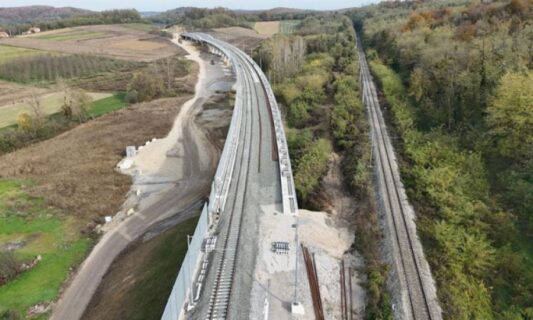
HŽ Infrastruktura, Croatia’s national rail infrastructure manager, has awarded a EUR 677 million construction contract to Afcons Infrastructure Limited for the full modernisation and double-tracking of the Dugo Selo to Novska railway line, marking the largest single railway contract in the country’s history. The 83-kilometre corridor on the TEN-T Mediterranean Corridor will be upgraded from a single-track, lower-speed line into a fully electrified, double-tracked route capable of sustaining train speeds of up to 160 km/h. The scope is sweeping: reconstruction of 16 stations (five of which will be reclassified as stops), construction of one entirely new station, removal of level crossings, installation of noise barriers, advanced signalling and telecommunications systems, and upgrades to the railway energy subsystem. Once construction begins under a programme running approximately five years and ten months, the project will fundamentally reshape the capacity, safety and interoperability of Croatia’s national network, which currently operates much of its mainline network on ageing single-track infrastructure that cannot meet modern European throughput standards.
A Balkan Rail Surge Backed by Brussels
This contract sits within a broader and accelerating trend across the Western Balkans and Central Europe, where EU cohesion and connectivity funding is catalysing long-delayed rail modernisation at a scale that would have been politically and fiscally unachievable without external support. Croatia alone is implementing a national rail investment programme worth nearly EUR 6 billion by 2030, targeting both the TEN-T Mediterranean and Rhine-Danube corridors. The Dugo Selo to Novska project draws from multiple EU mechanisms: around EUR 289 million from the Connecting Europe Facility, with EUR 245.6 million specifically secured under 2022 CEF calls for the 42-kilometre Ivanic-Grad to Kutina section, plus EUR 140.7 million channelled through Croatia’s National Recovery and Resilience Plan for the Kutina to Novska stretch. In a regional context, this investment echoes the scale of Serbia’s ongoing modernisation of the Novi Sad to Subotica line under similar EU grant frameworks, and mirrors Slovenia’s committed upgrades along its section of the Mediterranean Corridor through the Divača to Koper rail link. What distinguishes the Croatian project is its strategic depth: the completed line will not only serve domestic passengers but also strengthen freight connectivity from the Port of Rijeka through Zagreb and onward to the Serbian border at Tovarnik, positioning Croatia as a more competitive logistics hub on the southern European rail network. This momentum is reinforced by the government’s wider commitment outlined in Croatia’s rail infrastructure investment programme exceeding €4 billion, signalling sustained national and EU-backed financing aimed at transforming the country’s rail capacity and corridor competitiveness over the coming decade.
Project Fact Sheet
- Project Name: Dugo Selo to Novska Railway Modernisation and Double-Tracking
- Location: Central Croatia, along the TEN-T Mediterranean Corridor
- Project Value: EUR 677 million (construction contract); overall programme estimated at approximately EUR 620 million by HŽ Infrastruktura at planning stage
- Client/Owner: HŽ Infrastruktura (Croatian Railway Infrastructure)
- Main Contractor: Afcons Infrastructure Limited
- Key Components: Double-tracking and electrification of 83 km corridor; reconstruction of 16 stations; one new station; level crossing removals; noise barriers; advanced signalling and telecoms systems; railway energy subsystem upgrades
- Procurement Model: Most Economically Advantageous Tender (MEAT)
- EU Funding: Approximately EUR 289 million via Connecting Europe Facility (CEF); EUR 140.7 million via National Recovery and Resilience Plan 2021 to 2026
- Construction Duration: Approximately five years and ten months from contract signing
- Design Phase Support: Consortium of DB Engineering and Consulting, Željezničko projektno društvo, and Granova (Phase 1); Técnica y Proyectos, Egis Rail, Ingeniería y Economía del Transporte, and Inženjerski projektni zavod (Phases 2 and 3)
- Maximum Operating Speed on Completion: 160 km/h
- Strategic Impact: Strengthens the Zagreb to Vinkovci to Tovarnik axis and improves freight access to the Port of Rijeka
Project Team
- Client/Owner: HŽ Infrastruktura (Croatian Railway Infrastructure Manager)
- Main Contractor: Afcons Infrastructure Limited
- Phase 1 Design Consortium: DB Engineering and Consulting; Željezničko projektno društvo; Granova
- Phase 2 and 3 Design Consortium: Técnica y Proyectos (TYPSA); Egis Rail; Ingeniería y Economía del Transporte (INECO); Inženjerski projektni zavod
- Primary EU Financier: European Commission via Connecting Europe Facility (CEF)
- National Co-Financier: Republic of Croatia (Ministry of the Sea, Transport and Infrastructure); Croatian National Recovery and Resilience Plan
- Likely Supervisory Engineer: Expected to be appointed from firms active in CEF-funded rail supervision such as Systra, Egis Rail, or a local consortium ahead of construction commencement

