


Bell AI data center in Canada has been approved by the Rural Municipality of Sherwood’s council amid heated public opposition and disrupted council proceedings. Despite protests and procedural interruptions, the council approval for Bell artificial intelligence data center clears the way for what is expected to become one of the largest AI data centers in Canada, forming part of Bell’s broader “AI Fabric” initiative.

Project Overview
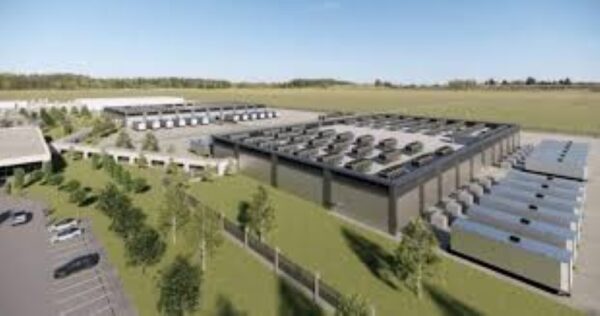
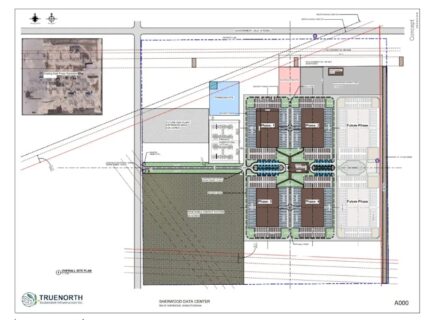
Bell data center is a 300MW hyperscale AI data center campus located just outside Regina in Saskatchewan. Other key features include:
Phased delivery: Initial operations expected by 2027
Project type: AI hyperscale compute campus
Program: Part of Bell’s national AI Fabric infrastructure
The facility is designed to deliver high-performance compute capacity for AI workloads. Bell AI data center campus will also support enterprises, research institutions, and government agencies with “sovereign AI” capabilities – ensuring data remains within Canada. This is as other similar developments continue to take shape across the country, including Net Zero Now energy and data center campus in Alberta.
Bell AI Data Center: At the center of public opposition and a changing digital infrastructure landscape
1) Canada’s largest AI infrastructure
The Sherwood project is the largest purpose-built AI data center project in Canada. It also represents Bell’s largest-ever investment in Saskatchewan and is expected to anchor a national AI compute ecosystem. Bell AI data center also positions Saskatchewan as a new regional hub for hyperscale infrastructure.
2) Economic Investment
The project is projected to generate up to $12 billion in economic value. This also includes 800 construction jobs, 80 permanent operational roles and additional indirect employment across the region.
The development also aligns with other provincial goals of diversifying beyond resource-based industries into digital and technology sectors.
3) Community resistance
The approval of Bell Canada’s AI data center amid community protests against it also highlights a critical countertrend. The backlash against Bell AI data center that interrupted council meetings were centered on concerns including transparency, environmental impact, and approval speed. Additionally, at least one registered delegate was denied the opportunity to speak before the vote.
This speaks to a growing trend where hyperscale developments are increasingly facing local pushback over land use, energy consumption, and governance processes.
Bell Canada’s AI Data Center Project Cost
Estimated economic impact: Up to $12 billion
Investment scale: Bell’s largest in Saskatchewan
Funding structure: Private investment with government partnership
While exact capex figures have not been fully disclosed, the scale places the project confidently within the multi-billion-dollar hyperscale investment bracket.
Project Fact Sheet for Bell AI Data Center in Sherwood, Canada
Location: RM of Sherwood near Regina, Saskatchewan
Capacity: 300M
Development Type: Hyperscale AI data center
Delivery: Phased, with initial operations by 2027
Economic Impact: Up to $12 billion
Jobs: 800 in construction, 80 during operations
Key Feature: Focus on sovereignty of AI compute power
Project Team
Lead Developer
Government Partner
- Government of Saskatchewan
- Network and Connectivity
- SaskTel
Technology Partners
Research Partners
- University of Regina
- Saskatchewan Polytechnic
Community Partners
- George Gordon First Nation
What Next for Bell AI Data Center in Saskatchewan, Canada
With council approval now secured, the Sherwood development is expected to move into active construction phases. This effectively positions Bell AI data center as a flagship project in North America’s AI infrastructure race.
The project is also part of a market shift where data centers are becoming national assets with governments increasingly co-investing in AI infrastructure.
Additionally, regions like Saskatchewan with available land and power infrastructure are emerging as new hyperscale frontiers, mirroring the likes of Texas in the United States.


