

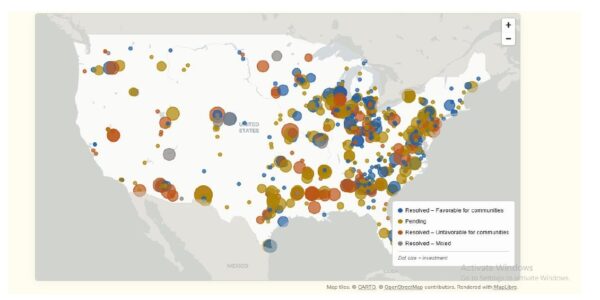
AI data center bans are spreading rapidly across the United States as communities challenge the aggressive expansion of hyperscale artificial intelligence infrastructure. Local governments increasingly argue that massive facilities strain electricity grids, raise utility costs, consume water resources, and damage community environments without providing sufficient long-term economic value.
The backlash has intensified sharply during recent months. According to the U.S. Data Center Moratorium Tracker, officials enacted 14 new restrictions between March and April alone. The tracker currently lists 50 active bans across multiple jurisdictions, alongside four permanent bans established by local governments. Authorities are also reviewing three proposed moratoriums while several additional jurisdictions continue exploring similar restrictions.
The scale of the increase has alarmed both policymakers and technology investors. The tracker recorded only eight moratoriums in May 2025. However, the number has now climbed to 78 measures covering active bans, proposed restrictions, expired pauses, and exploratory discussions nationwide.
AI Data Center Bans Reflect Rising Public Frustration
Communities previously welcomed data centers because developers promised tax revenue, jobs, and economic modernization. Nevertheless, public sentiment has shifted as residents experience rising energy costs, industrial-scale construction activity, and mounting environmental concerns surrounding hyperscale AI facilities.
Many residents now question whether data centers genuinely benefit local economies after construction concludes. Critics argue that facilities create relatively few permanent jobs while consuming enormous quantities of electricity and water. Consequently, opposition campaigns continue gaining momentum across both urban and rural regions.
Electricity demand remains the industry’s most controversial issue. AI hyperscalers continue racing to construct facilities capable of supporting advanced generative AI models and expanding inference workloads. However, utility companies must significantly expand transmission infrastructure to handle growing demand.
Wholesale electricity prices have reportedly increased by as much as 267% during the past five years. Utility providers continue passing infrastructure upgrade costs to both data centers and ordinary consumers, resulting in steadily rising utility bills across several states. Therefore, many communities increasingly associate AI infrastructure expansion with worsening household affordability pressures.
Federal Pressure Meets Local Resistance
Political leaders now recognize the expanding backlash against AI infrastructure development. President Donald Trump recently met with major technology firms at the White House and urged companies to “pay their own way” through a “ratepayer protection pledge.” Officials hope the measure will reduce financial burdens placed on households affected by utility expansion costs.
Despite those efforts, state and local officials increasingly support restrictions on new facilities. Lawmakers in at least 14 states are currently considering moratorium proposals targeting future data center development. Several measures would temporarily halt approvals while governments study impacts on electricity grids, water systems, emissions, and local infrastructure. Some states have already emerged as national flashpoints in the debate. Maine lawmakers recently passed legislation proposing the nation’s first statewide moratorium on large data centers before Governor Janet Mills later vetoed the measure. The proposed law would have blocked facilities requiring more than 20 megawatts of power until late 2027.
The national debate surrounding AI infrastructure expansion also contrasts sharply with projects still gaining political and community support in strategic development zones. One example is the $12.6 billion data center project in Wyandotte County, Kansas, which recently secured backing from local officials despite growing nationwide resistance toward hyperscale facilities. Supporters argue the project could generate significant economic activity, infrastructure upgrades, and long-term technology investment. However, the development also highlights the widening divide between jurisdictions pursuing AI-driven growth opportunities and communities increasingly concerned about electricity demand, environmental impact, and pressure on public resources.
Meanwhile, Oklahoma City approved a temporary moratorium on new data center construction and expansion through the end of 2026. Officials argued that rapidly changing conditions surrounding AI infrastructure justified pausing additional approvals while regulators reassess long-term impacts. Michigan has also become a major battleground. More than 27 communities across the state now maintain active moratoriums while lawmakers debate broader statewide legislation targeting future data center development.
The growing resistance to hyperscale AI infrastructure also comes as major projects continue advancing despite mounting public opposition. One notable example is the Baccara Data Center project in Arizona, a proposed $10 billion development in Maricopa County approved amid intense community concerns over water usage, electricity demand, and environmental pressure. The controversy surrounding the Baccara project reflects the broader national debate over AI-driven data center expansion, especially as more local governments introduce moratoriums and residents increasingly challenge large-scale infrastructure developments near residential communities.
Community Opposition Continues Intensifying
Public opposition has become increasingly emotional and politically charged in some regions. Residents frequently cite concerns involving noise pollution, water consumption, declining property values, and environmental degradation tied to hyperscale AI facilities.
One Indiana politician reportedly discovered a “NO DATA CENTERS” message after unknown assailants fired shots at their home. Elsewhere, town council members who approved controversial projects later resigned or lost reelection campaigns following intense public backlash.
Community activism continues expanding through public hearings, petitions, and local organizing efforts. In New York, more than 350 residents reportedly attended a hearing regarding a proposed data center moratorium in Lysander, forcing many attendees to wait outside because meeting rooms reached capacity.
Online discussions also reflect growing frustration toward hyperscale development. Reddit users increasingly criticize projects for raising utility costs and transforming suburban areas into industrial infrastructure zones. Several commenters argue that developers target suburban communities because utility upgrades can ultimately shift costs onto residents.
AI Expansion Faces Infrastructure and Supply Chain Challenges
The construction boom surrounding AI infrastructure has also created broader supply chain disruptions throughout the technology industry. Analysts already report severe shortages involving memory chips and storage components. Experts additionally warn that CPU shortages could emerge as AI inference demand accelerates globally.
Developers increasingly encounter delays tied to power infrastructure constraints, permitting disputes, and equipment procurement issues. Consequently, hyperscale operators struggle to maintain aggressive construction timelines promised to investors and shareholders.
These delays could create financial consequences throughout the broader AI ecosystem. Technology firms and venture capital investors continue spending billions on artificial intelligence infrastructure because they expect transformational future profits. However, prolonged construction delays and rising public resistance may weaken investor confidence if projects fail to advance as planned.
Several analysts now warn that smaller AI startups could face reduced funding opportunities if hyperscale infrastructure projects continue slowing nationwide. Investors may eventually reconsider long-term spending strategies if regulatory uncertainty continues spreading across major development markets.
Construction Industry Faces a Defining Moment
The rise of AI data center bans could significantly reshape the future of construction activity across North America. Data centers currently represent one of the fastest-growing segments within industrial construction, generating enormous demand for engineering services, electrical infrastructure, steel fabrication, and specialized contractors.
However, developers now encounter increasingly unpredictable permitting environments. Public hearings have become more contentious, while environmental reviews continue expanding across numerous jurisdictions. Consequently, contractors and suppliers face rising uncertainty surrounding procurement schedules, financing arrangements, and long-term investment planning.
Some developers may eventually redirect projects toward regions offering more favorable political environments and stronger utility capacity. Yet even traditionally supportive markets now face growing pressure from residents concerned about energy costs and environmental impacts.
The rapid spread of moratoriums demonstrates that AI infrastructure expansion no longer represents a purely technological or economic issue. Instead, communities increasingly view data centers as major industrial developments requiring stricter oversight, stronger accountability, and clearer public benefits.
Technology companies still require enormous computing capacity to sustain artificial intelligence growth. Nevertheless, communities across the United States increasingly insist that future development must balance innovation with affordability, environmental protection, and long-term infrastructure stability.
The nationwide backlash against hyperscale AI infrastructure also reflects the rapid pace of data center expansion across the United States during recent years. Projects such as the DataBank Minneapolis data center, launched in 2021 in Brooklyn Park, Minnesota, highlighted the industry’s growing investment in cloud computing and digital infrastructure. However, as AI workloads dramatically increase power demand, developments like the Minneapolis facility now form part of a broader national debate surrounding electricity consumption, environmental impact, and pressure on local infrastructure systems.

