

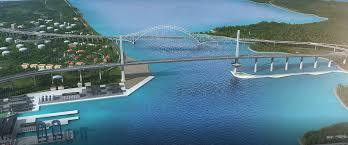
Fourth Bridge Panama Canal project is advancing as a major construction initiative integrating six lanes and metro connectivity. The project targets severe congestion between Panama City and western districts. It also strengthens one of the world’s most critical logistics corridors. Moreover, planners position the bridge as a transformative solution supporting urban mobility and trade efficiency. As a result, the development aligns with long-term infrastructure modernization strategies.
Fourth Bridge Panama Canal project expands multimodal construction scope
The Fourth Bridge Panama Canal project introduces six lanes for both light and heavy vehicles. Additionally, it incorporates dedicated provisions for high-capacity public transport systems. This includes integration with the Panama Metro, enhancing commuter mobility across the corridor. Consequently, the bridge evolves into a multimodal transport link rather than a conventional road crossing.
Furthermore, the design increases capacity while supporting future urban expansion demands. Engineers prioritize seamless connectivity between road and rail systems. Therefore, the structure improves efficiency across multiple transport modes simultaneously. In turn, this integration reduces reliance on private vehicles.
Meanwhile, planners emphasize long-term scalability within the project framework. The inclusion of metro infrastructure ensures adaptability to rising population demands. Thus, the bridge supports sustainable urban transport planning objectives.
Fourth Bridge Panama Canal project faces complex engineering challenges
The Fourth Bridge Panama Canal project requires advanced engineering due to its location over an active maritime route. The canal accommodates large vessels daily, demanding uninterrupted navigation clearance. Therefore, designers must ensure sufficient height and span configurations for ship passage.
Additionally, environmental conditions present further technical constraints for construction teams. High humidity, strong winds, and corrosive elements influence material selection and structural design. Consequently, engineers deploy specialized solutions to ensure durability and operational safety.
At the same time, construction sequencing must avoid disruptions to canal operations. Coordination with maritime authorities remains essential throughout execution phases. This approach safeguards global shipping flows while maintaining project timelines.
Strategic investment to ease congestion and enhance logistics
The Fourth Bridge Panama Canal project reflects an investment ranging from $1.4 billion to nearly $2 billion. This variation results from technical revisions and financial adjustments over time. Nevertheless, the scale underscores its national and regional importance.
Currently, existing crossings between Panama City and the west operate beyond capacity. Traffic congestion significantly affects daily commutes and freight transport efficiency. Therefore, the new bridge aims to redistribute traffic and reduce travel times.
Moreover, improved infrastructure enhances logistics performance linked to canal operations. Efficient land transport complements maritime trade, strengthening Panama’s global position. Consequently, the project delivers both economic and operational benefits.
In addition, the construction phase generates employment and stimulates related industries. Engineering, materials supply, and logistics sectors benefit directly from project execution. Thus, the investment supports broader economic growth.
Urban expansion strategy reinforces long-term infrastructure development
The Fourth Bridge Panama Canal project forms part of a wider urban modernization strategy. Authorities aim to improve mobility, integrate transport systems, and boost logistical efficiency. These objectives reflect the city’s rapid population and economic growth.
Furthermore, the project has undergone multiple revisions reflecting its complexity. Adjustments include cost recalibration, design optimization, and contractual restructuring. As a result, stakeholders ensure feasibility within evolving technical and financial conditions.
Meanwhile, international contractors and engineering firms contribute to project delivery. Their involvement brings specialized expertise and experience in large-scale infrastructure development. Therefore, the project maintains high technical standards.
Ultimately, the bridge represents more than a crossing over the canal. It reshapes urban mobility patterns while reinforcing a globally significant trade route. However, its long-term impact will depend on how infrastructure growth aligns with future demand.
Meanwhile, a separate regional initiative highlights similar cross-border infrastructure ambitions, as discussions continue around the Guayamerín–Guajará-Mirim binational bridge project linking Bolivia and Brazil. The project, which aims to enhance trade and connectivity across the Mamoré River, reflects a growing focus on strategic transport corridors in Latin America.
Project Fact Sheet
Project Name: Fourth Bridge Panama Canal Project
Location: Panama Canal, Panama City, Panama
Estimated Cost: $1.4 billion – $2 billion
Project Type: Bridge construction / multimodal transport infrastructure
Scope:
- Six-lane vehicular bridge
- Integration with Panama Metro system
- High-capacity transport corridor
- Strategic canal crossing
Key Features:
- Dedicated lanes for light and heavy vehicles
- Metro rail integration for mass transit
- High-clearance design for maritime navigation
- Corrosion-resistant structural materials
- Optimized spans to accommodate large vessels
Current Status: Under development with ongoing design refinements and phased construction planning
Objectives:
- Reduce congestion between Panama City and western region
- Improve commuter and freight mobility
- Strengthen logistics linked to canal operations
Economic Impact:
- Job creation during construction
- Increased efficiency in cargo movement
- Support for regional economic growth
Sustainability Considerations:
- Promotion of public transport use
- Reduced traffic emissions
- Durable infrastructure for long-term use
Project Team
Project Owner: Government of Panama
Lead Authorities:
Developers: Public sector-led initiative with international partnerships
Engineering & Design Teams:
- Multinational engineering consultants specializing in bridge design
- Transport planners focusing on multimodal systems integration
Contractors: International construction consortia with large-scale infrastructure expertise
Project Management:
- Government infrastructure agencies
- Independent oversight and compliance bodies
Key Stakeholders:
- Panama Canal Authority (ACP)
- Panama Metro authorities
- Logistics and transport sector stakeholders
- Local communities and businesses
Funding Structure: Government funding with potential international financing support
Regulatory Oversight: National environmental and infrastructure regulatory agencies ensuring compliance and safety standards


