

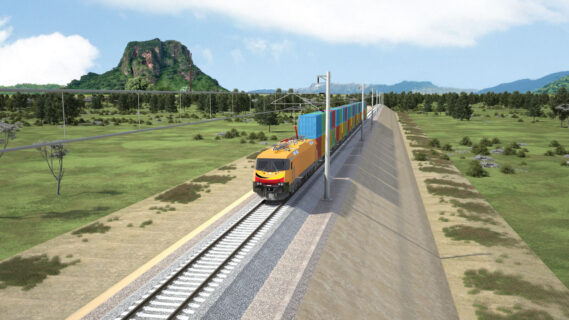
The $3bn+ Kampala-Malaba SGR project in Uganda is moving closer to implementation as Citibank mobilizes financing. Uganda has appointed the bank to mobilize financing required to fund the monumental railway project. The nation’s finance ministry noted that Uganda “is in talks with the Wolrd Bank to support the project. These remarks were noted on a recent post on X.
Earlier this month, the World Bank asserted that it was considering various potential financing options for the project. A Ugandan delegation in Washington for the IMF and World Bank Spring Meetings met officials from Citibank led by Richard Hodder. Richard is the managing director and global head export and agency finance.
Conversely, the aim of the meeting was “to discuss progress made in mobilising the required financing for the SGR project,” the post said. After a prolonged delay caused by unfruitful efforts to secure financing from Beijing, Uganda in 2024 handed the SGR project to Turkish construction firm Yapi Merkezi.
Other Projects
Tanzania is also shaping up its end of the Standard Gauge Railway, with significant investments made to ensure that the project is complete. Tanzania Railway Corporation (TRC) is building a modern railway network spanning no less than 2,561 kilometers. Furthermore, it is expected to connect the country and provide seamless transportation. These include regions such as connecting the port of Dar es Salaam with Mwanza, Kigoma, and Katavi. It will also extend to connect with neighboring countries of Rwanda, Burundi, Uganda, and the DRC. The possibilities and significance of the project is already noticeable through the section of the rail that became operational. The SGR has also spurred demand for local construction materials. Among these is steel and cement, stimulating the manufacturing sector.
Scope of Implementation on the Kampala-Malaba SGR Project
The Kampala-Malaba SGR project is one that has been marred with challenges despite Uganda making advancements. Initial preparatory works have begun with some financing from the government. However, full-scale construction has yet to begin, pending availability of funding. The 272-kilometre (169 mile) rail line will run from the capital Kampala to Malaba at the border with Kenya. Furthermore, it will connect landlocked Uganda to its neighbour’s rail network and onto the Indian Ocean seaport of Mombasa.
Key Project Scope and Technical Details:
- Route: The line runs from the Kenyan border at Malaba through Tororo, Butaleja, Namutumba, Luuka, Iganga, Mayuge, Jinja, Buikwe, Mukono, and Wakiso, terminating in Kampala.
- Capacity & Speed: The railway is designed for 1,435 mm standard gauge. There are also passenger trains reaching 120 km/h and freight trains reaching 80 km/h.
- Infrastructure: The project includes the construction of 2 major stations, 4 medium stations, 1 marshalling yard, and also 3 freight terminals.
- Projected Impact: The railway is expected to handle approximately 25 million tons of freight and 2.5 million passengers annually. It also aims to lower cargo transport costs by 35%.
- Land Acquisition: Approximately 150km (54%) of the Right Of Way (ROW) between Malaba and Mayuge has been acquired as of October 2024
Project Overview
- Project Name: Kampala–Malaba Standard Gauge Railway (SGR)
- Project Type: Railway infrastructure (standard gauge)
- Value: $3 billion+
- Purpose: Improve regional rail connectivity and freight movement
- Status: Financing mobilization ongoing; preparatory works started
Key Stakeholders
- Government: Uganda Ministry of Finance
- Financing Lead: Citibank
- Potential Financier: World Bank
- Contractor: Yapi Merkezi
- Key Figure: Richard Hodder
Location
- Route: Kampala to Malaba (Kenya border)
- Country: Uganda
- Regional Link: Connects to Kenya rail network and Mombasa port
Scope
- 272 km standard gauge railway line
- Passenger (120 km/h) and freight (80 km/h) services
- Stations, freight terminals, and marshalling yard
Funding / Delivery Model
- Government-led project with external financing
- Financing mobilization via Citibank
- Engagement with World Bank for funding options
Status
- Financing discussions ongoing
- Preparatory works initiated
- Full construction pending funding closure
Key Risks & Challenges
- Delays due to financing gaps
- Previous funding setbacks (China)
- Land acquisition progress (partial)
Strategic Significance
- Connects landlocked Uganda to regional trade routes
- Links to Port of Mombasa
- Reduces transport costs and improves logistics efficiency
Technical Details
- Standard gauge: 1,435 mm
- Capacity: ~25 million tons freight, 2.5 million passengers annually
- Infrastructure: 2 major stations, 4 medium stations, 3 freight terminals Bottom of Form


