

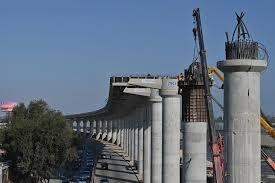
Mexico’s MIP infrastructure investment project is advancing as a $12 billion construction-driven program targeting energy, transport, and digital assets across the country. The initiative positions itself as one of the largest private-led infrastructure pipelines in Mexico, aligning with national development priorities while unlocking capital flows into construction-intensive sectors.
Moreover, the program introduces a structured five-year investment pipeline, combining equity and debt financing to accelerate delivery. The strategy emphasizes scalable construction outputs, ensuring projects move from planning into execution with minimal delays. Consequently, the initiative strengthens Mexico’s infrastructure base while supporting economic expansion.
Mexico’s MIP infrastructure investment project drives renewable construction growth
Primarily, the project allocates approximately $8 billion to renewable energy construction. This includes new solar and wind power developments, alongside acquisitions of operational assets requiring upgrades or expansion. As a result, the program directly supports energy transition goals while creating significant construction activity.
Additionally, the investment manager plans to collaborate with Mexico’s state-owned utility on new generation facilities. These partnerships will likely streamline permitting and grid integration processes. Therefore, construction timelines could improve compared to previous private-sector projects facing regulatory constraints.
Meanwhile, early-stage commitments already exceed $1 billion, including highway acquisitions and wind farm stakes. These transactions demonstrate immediate project mobilization rather than long-term speculation. In turn, they signal confidence among institutional investors participating in the funding structure.
Furthermore, the broader policy environment is evolving to support such investments. Recent legislative reforms aim to attract both private and public capital into infrastructure. Consequently, the regulatory landscape is gradually becoming more conducive to large-scale construction programs.
Mexico’s MIP infrastructure investment project expands highway construction network
Equally important, the Mexico’s MIP infrastructure investment project dedicates roughly $2.5 billion to highway construction and upgrades. This includes approximately 500 kilometers of new road construction and 200 kilometers of asset acquisitions. Therefore, the transport component significantly enhances regional connectivity.
Specifically, construction will focus on high-growth corridors such as the Bajío region and the Mexico City–León route. These areas support industrial and logistics expansion, making infrastructure upgrades economically strategic. As a result, the road projects are expected to boost freight efficiency and reduce travel times.
In addition, the initiative allocates $1 billion to midstream infrastructure, supporting energy logistics systems. Another $500 million targets digital infrastructure, including data connectivity assets. Together, these segments broaden the construction scope beyond traditional sectors.
Meanwhile, the financing model combines approximately $6 billion in equity with $6 billion in debt. This balanced structure attracts pension funds, sovereign wealth funds, and institutional investors. Consequently, risk distribution improves while ensuring sustained capital availability for construction phases.
Notably, previous involvement in major energy asset transactions has strengthened investor confidence. The investment manager has experience structuring large-scale deals involving power infrastructure. Therefore, execution risks may be lower compared to less experienced developers.
Investment momentum and policy alignment accelerate delivery
Importantly, Mexico’s leadership continues to encourage private-sector participation in infrastructure development. Policy adjustments and new regulatory frameworks aim to reduce uncertainty in energy investments. As a result, project pipelines like this one gain stronger institutional backing.
However, some constraints remain, particularly in energy sector governance. Despite this, recent reforms targeting power generation rules seek to address investor concerns. Consequently, momentum is gradually shifting toward increased private participation.
Looking ahead, additional project announcements are expected in the coming months. These will likely include new construction contracts, asset acquisitions, and financing closures. Therefore, the pipeline will continue expanding as capital deployment accelerates.
Moreover, Mexico’s evolving energy and infrastructure pipeline builds on recently delivered assets such as the 766MW Topolobampo III power plant, which demonstrates the country’s capacity to execute large-scale energy construction projects while supporting grid reliability.
Ultimately, the Mexico’s MIP infrastructure investment project represents a comprehensive construction strategy. It integrates energy, transport, and digital infrastructure into a unified investment framework. As such, it plays a critical role in shaping Mexico’s next phase of infrastructure development.
Project Fact Sheet
Project Name: Mexico’s MIP Infrastructure Investment Project
Total Investment Value: $12 billion
Project Duration: 5 years
Primary Sectors: Renewable energy, highways, midstream, digital infrastructure
Renewable Energy Allocation: $8 billion
Highways Allocation: $2.5 billion
Midstream Allocation: $1 billion
Digital Infrastructure Allocation: $500 million
Financing Structure: $6 billion equity, $6 billion debt
Highway Scope: 500 km new construction, 200 km acquisitions
Key Regions: Bajío region, Mexico City–León corridor
Energy Scope: Wind and solar construction, acquisition of operating assets
Policy Context: Supported by recent infrastructure investment reforms
Current Status (2026): Fundraising and early-stage investments underway
Project Team
Project Sponsor/Developer: Mexico Infrastructure Partners (MIP Real Assets)
Government Partner: Federal Government of Mexico
Energy Partner: Comisión Federal de Electricidad (CFE)
Equity Investors: Institutional investors, pension funds, sovereign wealth funds
Debt Providers: International and domestic financial institutions
Construction Contractors: To be announced per project phase
Engineering Consultants: To be appointed for energy and transport segments
Legal Advisors: Supporting structuring of equity and debt instruments
Transaction Advisors: Financial and infrastructure advisory firms
Asset Partners: Renewable developers and infrastructure asset owners
Operations Managers: MIP-led operational structures for acquired assets

