

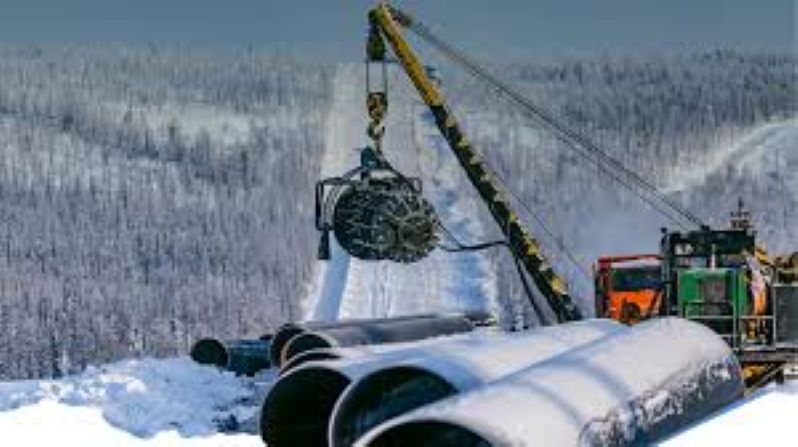
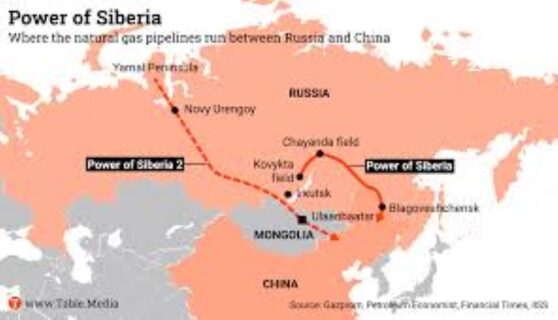
Proposed Power of Siberia 2 (PoS-2) gas pipeline project is rapidly evolving from a long-stalled concept into one of the most consequential and contested energy infrastructure developments of the decade. Designed to transport up to 50 billion cubic meters of natural gas annually from Russia’s Yamal Peninsula to China via Mongolia, the project sits at the intersection of geopolitics, energy security, sanctions and Eurasian logistics.
Despite a recent announcement of a “general understanding” between Moscow and Beijing on route alignment, other important elements of the project including pricing, financing, construction timelines and long-term contractual terms remain unresolved. This leaves the project structurally uncertain even as firm political handshakes continue to be made.
Power of Siberia 2 Project: A Gas Pipeline Born from Geopolitical Shock
Power of Siberia 2 gas pipeline project is not a standalone infrastructure expansion. It is a direct consequence of the collapse of Russia-Europe energy relations after 2022.
Before the Ukraine war, Europe absorbed the majority of Russian pipeline gas exports. That market has since contracted sharply, forcing Moscow to increasingly pivot eastward. China, meanwhile, is steadily expanding gas imports as it balances coal reduction with industrial demand growth.
Power of Siberia 2 gas pipeline project is now increasingly seen as a strategic re-routing of Russian energy flows toward Asia than a commercial project. It will effectively reshape Russia’s export economy with China.
It is also broadly agreed that the project is heavily political. For Russia, it is a route toward resilience under sanctions; for China, it offers supply diversification while strengthening bargaining leverage over pricing and terms.
Route Overview: The 2,600 km Eurasian Corridor
The proposed route for Power of Siberia 2 gas pipeline project is widely agreed upon by involved parties:
Origin: Yamal Peninsula, Russia’s Arctic gas basin
Transit: Western and Central Siberia to Mongolia
Destination: Northern China industrial regions
Length: 2,600 km (approx. 1,600 miles)
Capacity: 50 bcm annually
Involved/Associated Operators: Gazprom PJSC, China National Petroleum Corporation (CNPC)
The route would run through some of the most logistically complex and climatically extreme terrain on Earth. This will include the Arctic permafrost zones, remote Siberian expanses and high-altitude Mongolian steppe.
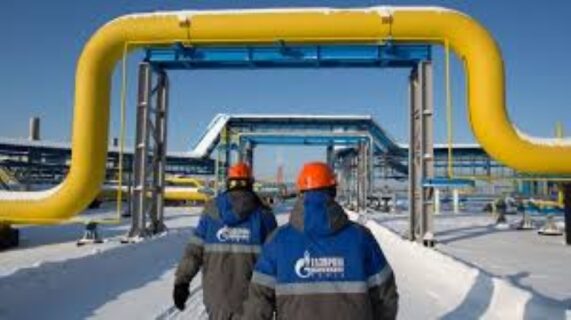
Power of Siberia 2 Project: Engineering in the World’s Harshest corridor
1. Permafrost and Harsh Climate
A significant portion of the Russian segment crosses permafrost zones that are increasingly unstable due to warming temperatures. This introduces long-term risks of ground subsidence, pipeline deformation, increased maintenance cycles and higher lifecycle costs.
These risks are structurally similar to challenges seen in Arctic oil and gas infrastructure globally, but PoS-2 would scale them significantly due to its length.
2. Remote Logistics and Supply Chain Challenges
Construction would require heavy-lift transport across undeveloped terrain, seasonal access constraints across winter ice roads and summer marshlands, and dependence on rail corridors that are themselves vulnerable.
Unlike coastal LNG terminals or European pipeline networks, PoS-2 is an inland megaproject. This makes it highly sensitive to logistical disruption.
3. Mongolian Transit Dependency
Mongolia is an important mid-point in the Power of Siberia 2 gas pipeline system. This introduces three layers of risk spanning transit tariff negotiations, China and Russia sovereignty and long-term energy regulations.
Also noteworthy is that Mongolia’s infrastructure planning has not yet fully integrated Power of Siberia 2 gas pipeline project into binding national development frameworks. This adds a layer of non-technical delay risk.
Power of Siberia 2 Project: Veiled with Politics
While engineering challenges are substantial, recent developments on Power of Siberia 2 gas pipeline point toward increasing constraints by politics and not construction capability.
1. China’s Strategic Hedging
China is not treating on Power of Siberia 2 gas pipeline as a guaranteed purchase contract but as a negotiation instrument. Beijing is expanding LNG imports from multiple suppliers, scaling renewables aggressively and increasing pipeline imports from Central Asia.
This allows China to delay binding commitments while retaining leverage over price structures and flexibility clauses.
2. Russia’s Market Dependency Trap
Russia, by contrast, has far fewer alternatives. After losing most European gas markets, Power of Siberia 2 gas pipeline is central to its revenue replacement strategy and long-term export stability.
This asymmetry gives China bargaining power.
3. Mongolia’s Balancing Act
Mongolia faces a classic transit-state dilemma. This is encompassed in the economic benefit from transit fees and infrastructure development and political risk of overdependence on two major powers – China and Russia. The pressure to stand neutral is clearly overbearing.
Any shift in Mongolian policy outlook has the potential to delay or reprice the entire Power of Siberia 2 gas pipeline corridor.
Power of Siberia 2 Financing Risk: A $70-100 Billion Question Mark
Although no final project cost estimate has been formally announced, comparable infrastructure benchmarks suggest Power of Siberia 2 gas pipeline could exceed $60-100 billion in total lifecycle investment. This is when including pipeline construction, compressor stations, arctic engineering costs and cross-border infrastructure development.
Key financial uncertainties include:
- Who funds upstream Russian field development
- Whether China co-finances infrastructure or only purchases gas
- Pricing formula disputes tied to oil-indexed versus market-linked structures
This unresolved financial structure remains one of the main reasons the project has not moved beyond framework agreements and handshakes.
Geopolitical Impact of the Power of Siberia 2 Gas Pipeline Project
If completed, Power of Siberia 2 gas pipeline would:
1. Lock in a Russia-China energy axis where Russia would become a structurally embedded supplier to China for decades.
2. Reduce Europe’s leverage over Russian energy exports. Europe would be further decoupled from Russian gas flows.
3. Intensify LNG competition globally. U.S., Qatari, and Australian LNG exporters would face stronger long-term competition in Asian markets.
4. Rebalance Eurasian infrastructure geography. The Russia-China gas pipeline would complement existing pipelines like Power of Siberia 1, creating a dual-corridor gas system across northern Asia.
Current Status: “Agreed Route, Unagreed Future”
Recent diplomatic statements between China and Russia confirm partial convergence. Route alignment has been broadly agreed upon, construction methodology has been discussed but no formal pricing or timeline has been finalized.
At the same time, high-level meetings have repeatedly failed to produce a final investment decision. This, to a point, presents the Russia-China gas pipeline as a geopolitical tool rather than an executable project.
Outlook on Power of Siberia 2 Gas Pipeline Project: Three Possible Trajectories
Scenario 1 – Construction
Incremental agreements lead to phased construction starting late 2020s. This is the most optimistic outlook.
Scenario 2 – Delay
China continues to stall while expanding alternative energy imports, keeping Power of Siberia 2 gas pipeline as leverage rather than infrastructure.
Scenario 3 – Geopolitical Intervention
Current major global events whose impacts reverberate across energy markets could also shape outlook on the development of Power of Siberia 2 gas pipeline. These include the Russia-Ukraine war, the U.S.-Israel-Iran war, Strait of Hormuz disruptions, LNG price spikes and tariffs and sanctions. These have the potential to catapult more political handshakes and a final investment decision.


