

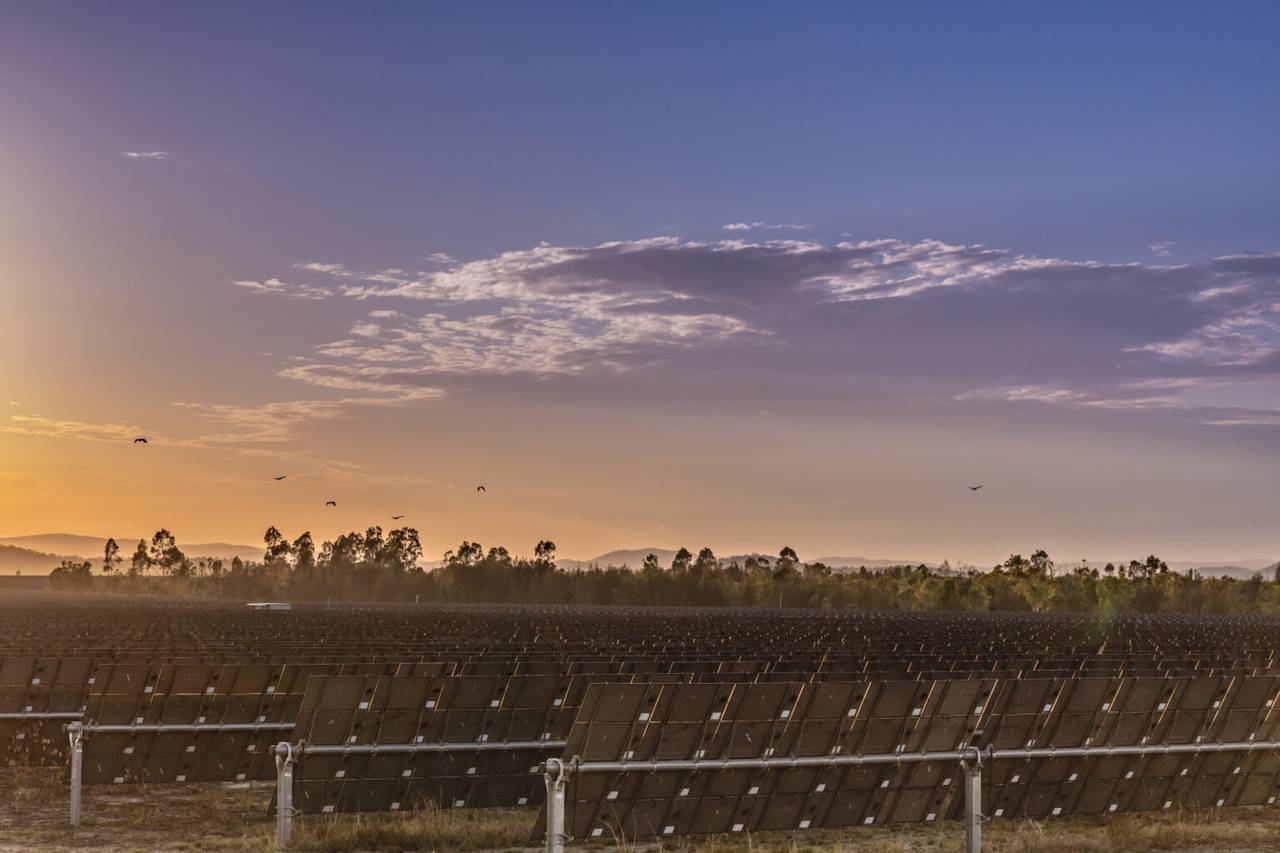
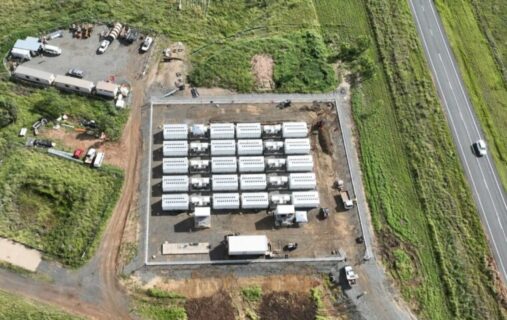
Bulli Creek solar-battery project is reshaping Australia’s renewable construction sector after developers redesigned the first phase to prioritize battery storage and reduce exposure to negative daytime electricity prices. The estimated $2.5 billion development in southern Queensland will now begin with a smaller 300MW solar facility paired with a 425MW/1,700MWh battery system. Developers expect the revised configuration to improve project viability while strengthening grid stability during evening demand peaks.
Genex Power revised the original development strategy after failing to secure sufficient equity support for a standalone utility-scale solar installation. The initial plan proposed a 775MW first-stage solar development before introducing storage later in the construction timeline.
However, worsening market conditions forced the company to rethink the project structure. Rooftop solar systems continue flooding Australia’s National Electricity Market (NEM) with cheap daytime electricity. Consequently, wholesale prices frequently fall into negative territory during peak solar production hours.
Genex chief executive Craig Francis said developers could no longer ignore the financial risks facing large standalone solar projects. Therefore, the company decided to bring forward battery construction so stored electricity can be dispatched during more profitable evening demand periods.
The Bulli Creek development still ranks among Australia’s largest planned renewable energy projects. Once fully completed, the facility could deliver up to 2GW of solar generation capacity alongside battery storage reaching 600MW and 2,400MWh.
Bulli Creek solar-battery project redesign changes construction timeline
The Bulli Creek solar-battery project redesign significantly changes the construction sequence and financing structure. Under the original schedule, developers expected to financially commit the first 775MW stage by the end of 2025 while beginning construction this year.
Developers also intended to introduce a 400MW/1,600MWh battery midway through the first solar construction phase. However, the revised plan now combines both assets from the beginning of the project rollout.
Genex currently targets a final investment decision, financial close, and construction start in 2028. Although the project already holds planning approvals, the redesign requires a fresh grid connection assessment process.
Francis explained that the revised approach lowers costs while improving investor confidence. He also noted that future development phases will likely follow a similar structure by pairing moderate-scale solar installations with large battery systems.
Across Australia, renewable energy developers increasingly prefer integrated solar-plus-storage projects instead of standalone solar farms. Large battery systems help operators store excess daytime electricity and release energy during evening demand peaks when prices rise.
Energy analysts believe the “solar duck” effect continues reshaping renewable construction planning nationwide. Rooftop photovoltaic systems now generate massive daytime electricity volumes, forcing utility-scale solar developers to rethink project economics.
Bulli Creek solar-battery project maintains regional construction commitments
The Bulli Creek solar-battery project continues supporting regional development commitments despite the revised construction timeline. Local stakeholders expressed concern after developers reduced the scale of the first phase and delayed the expected construction start.
Community members worried the slower rollout could affect employment opportunities, contractor participation, and infrastructure investment around Millmerran, the nearest town to the project site.
Francis acknowledged those frustrations while reaffirming the company’s long-term commitment to the region. Consequently, Genex decided to separate several community funding initiatives from the project’s final investment decision process.
One key initiative involves the redevelopment of the Domville Place community hub in Millmerran. Genex confirmed it will immediately release funding for the project so construction can begin next year instead of waiting for financial close on the renewable energy development.
Genex acquired the Bulli Creek project in 2022 after the development had already secured government planning approvals. Since then, the company has continued refining the project structure to align with changing market conditions across Australia’s renewable energy sector.
Developers now consider large-scale battery infrastructure essential for future renewable construction projects. Therefore, Bulli Creek’s revised strategy could influence how other utility-scale solar developments approach financing, project sequencing, and long-term grid integration.
The Bulli Creek solar-battery project redesign also reflects a broader transition across Australia’s renewable construction sector, where developers increasingly prioritize large-scale storage infrastructure to stabilize electricity supply and improve project economics. A similar trend recently emerged in Victoria after the Koorangie Energy Storage System reached full operational capacity with 185MW/370MWh of storage using Tesla Megapacks and grid-forming inverter technology. The Victorian project now provides critical system strength services while supporting renewable energy integration across the Murray River Renewable Energy Zone.
Project Fact Sheet
Project name: Bulli Creek Solar-Battery Project
Location: Southern Queensland, Australia
Estimated project cost: $2.5 billion
Project type: Utility-scale solar and battery energy storage development
Total planned solar capacity: 2GW
Total planned battery capacity: Up to 600MW / 2,400MWh
Revised first-stage solar capacity: 300MW
Revised first-stage battery capacity: 425MW / 1,700MWh
Original first-stage solar plan: 775MW
Original battery proposal: 400MW / 1,600MWh
Expected construction start: 2028
Current project status: Fully permitted with revised grid connection process underway
Main project objective: Improve commercial viability and reduce negative pricing exposure
Community investment initiative: Domville Place redevelopment funding
Nearest regional town: Millmerran
Project Team
Project Developer and Owner: Genex Power
Strategic Investment Partner: J-Power
Chief Executive Oversight: Craig Francis, Genex Power CEO
Grid Connection and Market Authority: National Electricity Market (NEM) operators and Queensland grid authorities
Battery Storage Integration Scope: 425MW / 1,700MWh utility-scale battery energy storage system
Solar Construction Scope: 300MW first-stage solar farm development
Engineering and Technical Advisory Scope: Project redesign, grid optimization, and staged construction planning
Community Infrastructure Commitment: Domville Place community hub redevelopment in Millmerran
Planning and Environmental Approval Authorities: Queensland Government regulatory agencies
Future EPC Scope: Solar farm, battery installation, transmission infrastructure, and grid integration works
Project Type: Utility-scale solar and battery storage renewable energy development
Strategic Objective: Reduce negative wholesale pricing exposure and improve evening peak energy supply
Long-Term Development Target: 2GW solar generation capacity with up to 600MW / 2,400MWh battery storage capacity


