

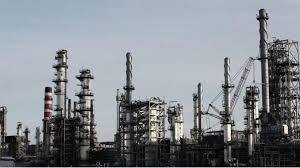
Dammam Copper Plant is advancing Saudi Arabia’s industrial expansion after a Chinese-Saudi joint venture confirmed a $566 million investment in a major copper processing complex. The project will rise within Dammam Port Industrial Park and support growing regional demand for copper products. Moreover, the development aligns with Saudi Vision 2030 and strengthens the Kingdom’s push toward industrial diversification and local manufacturing growth.
China’s Zhejiang Hailiang and Saudi Arabia’s Rawas National Investment Holding formed the joint venture behind the project. Hailiang will control 51% of the venture, while Rawas will hold the remaining 49%. Additionally, the partners aim to position Saudi Arabia as a strategic metals manufacturing hub connecting Asia, Africa, and Europe.
The Dammam Copper Plant will process 150,000 tonnes of copper products annually. Planned production includes 30,000 tonnes of copper tubes, 20,000 tonnes of copper busbars, 50,000 tonnes of recycled refined copper, and 50,000 tonnes of copper foil. Consequently, the facility will rank among the region’s largest downstream copper processing plants.
Saudi Arabia continues expanding investments in mining, metals, and industrial processing projects. Therefore, the new copper complex reflects broader national efforts to localize manufacturing and reduce dependence on imported industrial products. The project also supports sectors linked to renewable energy, electric vehicles, electronics, and large-scale construction works.
Dammam Copper Plant to strengthen Saudi industrial manufacturing
The Dammam Copper Plant will support several industries that rely heavily on copper products. Copper foil from the facility will supply battery manufacturers, while copper tubes will target air conditioning and refrigeration markets. Furthermore, copper busbars will serve power transmission, industrial systems, and infrastructure developments across the region.
The project also includes a major recycling component. Developers plan to process 50,000 tonnes of recycled copper every year. Recycling copper requires significantly less energy than primary production. As a result, the plant could improve sustainability standards while reducing pressure on imported refined copper supplies.
Saudi Arabia has recently attracted major Chinese investments into industrial manufacturing and mineral processing. Several projects now target lithium, aluminum, steel, and battery materials production. Consequently, analysts expect stronger cooperation between Saudi and Chinese industrial groups during the coming years.
The Dammam location offers another strategic advantage for the development. Dammam Port provides direct access to global shipping routes connecting the Middle East with Europe, Asia, and Africa. Therefore, the project could lower export costs while improving regional supply chain efficiency.
Developers also expect the facility to create opportunities for contractors, logistics providers, engineering firms, and industrial suppliers. The project may further stimulate industrial growth across Saudi Arabia’s Eastern Province as supporting businesses establish operations near the complex.
Construction works planned for Dammam Copper Plant
Construction of the Dammam Copper Plant will proceed in phases within Dammam Port Industrial Park. The development will include advanced copper processing lines, recycling facilities, industrial utilities, storage infrastructure, and operational support buildings. In addition, engineers plan to integrate intelligent manufacturing systems to improve efficiency and production monitoring.
Zhejiang Hailiang already operates manufacturing facilities in several international markets, including the United States, Vietnam, Indonesia, Thailand, Hungary, and Morocco. The Saudi project will strengthen the company’s international production network and expand access to emerging regional markets.
Meanwhile, Rawas National Investment Holding will support local coordination, investment management, and regulatory engagement. Saudi shareholders and strategic partners are also expected to contribute regional market expertise and industrial relationships throughout project implementation.
Industry observers believe the Dammam Copper Plant could encourage additional downstream metals investments within Saudi Arabia. The project may also attract suppliers linked to renewable energy systems, battery production, construction materials, and industrial manufacturing.
Saudi Arabia continues prioritizing industrial infrastructure projects under Vision 2030. Therefore, developments such as the Dammam Copper Plant are expected to play an important role in expanding local production capacity, increasing exports, and supporting long-term economic diversification.
The Dammam Copper Plant adds momentum to Saudi Arabia’s fast-growing industrial construction sector, which already includes major manufacturing developments such as the $2 billion Saudi Lenovo production plant in Riyadh. Both projects reflect the Kingdom’s wider push to localize advanced manufacturing and expand industrial infrastructure under Vision 2030. The Lenovo facility will produce millions of “Saudi Made” laptops, desktops, and servers from a 200,000-square-meter campus within Riyadh’s Special Integrated Logistics Zone.
Project Fact Sheet
Project name: Dammam Copper Plant
Location: Dammam Port Industrial Park, Saudi Arabia
Project value: $566m
Project type: Copper processing and recycling facility
Annual processing capacity: 150,000 tonnes
Copper tube production: 30,000 tonnes annually
Copper busbar production: 20,000 tonnes annually
Recycled refined copper capacity: 50,000 tonnes annually
Copper foil production: 50,000 tonnes annually
Development structure: Chinese-Saudi joint venture
Ownership split: Zhejiang Hailiang 51%, Rawas National Investment Holding 49%
Target sectors: Construction, electronics, renewable energy, electric vehicles, power infrastructure
Key export markets: Middle East, Africa, Europe
Construction model: Multi-phase industrial development
Strategic objective: Expand Saudi downstream metals manufacturing
Sustainability component: Copper recycling operation integrated into processing complex
Project Team
Project developer: Zhejiang Hailiang
Saudi joint venture partner: Rawas National Investment Holding
Strategic investment partners:
Industrial zone authority: Dammam Port Industrial Park
Primary end-use industries: Construction, HVAC manufacturing, energy infrastructure, battery manufacturing, electronics manufacturing


