

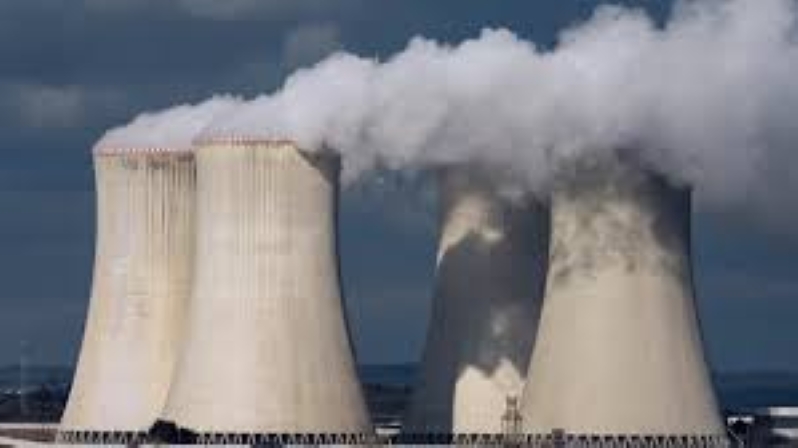
US nuclear developer Blue Energy and energy technology giant GE Vernova have announced plans to develop “the world’s first gas-plus-nuclear power plant” in Texas, combining small modular nuclear reactors (SMRs) with natural gas generation to accelerate time-to-power for energy-intensive industries and AI infrastructure. Announced on 5 May 2026, the collaboration centers on a planned 2.5 GW power project in Texas, where Blue Energy plans to deploy GE Vernova Hitachi’s BWRX-300 small modular reactors alongside two GE Vernova 7HA.02 gas turbines under a phased gas-to-nuclear development model.
Blue Energy said the approach is designed to shorten the long lead times typically associated with nuclear deployment. By first energizing sites with gas turbines before transitioning to nuclear steam supply, the project aims to compress traditional nuclear development timelines from over a decade to approximately 48 months or less. Taking Google’s $10 billion nuclear partnership with Kairos Power for comparison, the tech giant is targeting operations start by 2035. Nuclear-gas hybrid aims to shorten such timelines.
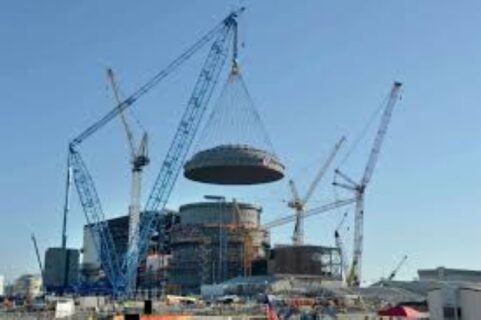
Strategic Timing Amid US AI Data Center Boom
The announcement for a hybrid nuclear-gas power plant by Blue Energy in Texas comes amid surging US electricity demand linked to hyperscale data centers. Also contributing to the growing power demand is AI compute infrastructure, advanced manufacturing, electrification and industrial growth.
Rather than framing gas and nuclear as competing technologies, the Blue Energy-GE Vernova model pairs them sequentially where:
- Natural gas provides near-term dispatchable generation, allowing faster energization.
- SMRs subsequently replace and/or supplement gas generation, transitioning the site toward lower-carbon baseload power.
This hybrid model could also come out as attractive to data center developers and industrial campuses requiring immediate large-scale power access without waiting for full nuclear licensing and construction cycles.
The project also aligns with broader US industrial policy supporting domestic nuclear supply chains and advanced reactor commercialization.
Blue Energy Nuclear-Gas Power Plant in Texas: Project Cost and Expected Milestones
Blue Energy’s commercial model is built around offsite prefabrication of major plant modules and modular deployment using shipyard and fabrication yard infrastructure. Staged financing unlocked through early non-nuclear asset deployment also factors in.
This structure is intended to lower upfront financing risk compared with conventional nuclear builds.
The project is currently targeting the following milestones:
- Final Investment Decision (FID) by 2027
- Gas turbine delivery reservation by 2029
- Gas power online as early as 2030
- Nuclear power ramp-up as early as 2032
Fact Sheet for Blue Energy Nuclear-Gas Power Plant in Texas
Project Model: Gas-Nuclear Power Plant Hybrid
Reactor Technology: BWRX-300 SMR
Gas Turbines: 2 units of GE Vernova 7HA.02
Total Planned Capacity: 2.5 GW
- Approx. 1.0 GW gas generation (initial)
- Approx. 1.5 GW nuclear generation (later phase)
Early Site Works: Planned 2026
FID: 2027
Gas Turbine Delivery: 2029
Initial Power: 2030 target
Nuclear Ramp-Up: 2032 target
Project Stakeholders
Developer: Blue Energy
Technology Partner/Gas Turbines: GE Vernova
Reactor Technology Provider: GE Vernova Hitachi Nuclear Energy (GVH)
Regulatory Authority: U.S. Nuclear Regulatory Commission (NRC)
Snapshot of Development Timeline
2023
January 2026
- US NRC approves Blue Energy licensing topical report supporting resequenced construction model.
May 2026
- Blue Energy and GE Vernova announce 2.5 GW collaboration.
- Slot reservation signed for two 7HA.02 gas turbines.
2026
- Planned start of early site works in Texas.
2027
- Final Investment Decision (FID) targeted.
- Planned NRC construction permit application.
2029
- Delivery target for gas turbines.
2030
- Target for initial 1 GW gas generation energization.
2032
- Target for nuclear power ramp-up to 1.5 GW.
Blue Energy Nuclear-Gas Power Plant in Texas: Development Outlook
If successful, the Texas project could establish a new delivery template for meeting AI-era electricity demand while de-risking long-duration nuclear construction timelines.
In a US power market increasingly squeezed by data center growth, this “gas now, nuclear next” model may prove commercially compelling – essentially giving hyperscalers a faster route to gigawatts without waiting for standalone nuclear projects to be completed.


