

The U.S. power sector is entering a phase where the challenge is no longer simply building generation—it is deciding what deserves to be built at all.
That tension is now clearly visible in the latest interconnection cycle from PJM Interconnection, where 811 generation projects representing roughly 220 gigawatts of capacity have applied to connect to the grid under a newly reformed review process.
On paper, the scale looks like a surge of opportunity. In practice, it is also a stress test for how the United States manages one of the most congested and politically sensitive parts of its energy transition: the queue that determines which power projects actually reach the grid.
A queue reform built for a backlog crisis
The latest intake is the first under PJM’s redesigned interconnection framework, which replaces the long-standing first-come, first-served model with a “first-ready, first-served” system.
That shift is not cosmetic. It is a structural response to years of backlog accumulation, where thousands of projects stacked up in review queues, many of them speculative, underfinanced, or stalled by permitting and supply chain constraints.
Under the new system, developers are now required to demonstrate readiness before entering the queue. That includes upfront financial commitments, site control, and technical completeness. Projects that cannot meet those thresholds do not proceed.
In effect, PJM is tightening the gate before the queue even begins.
The goal is straightforward: reduce congestion, eliminate low-probability projects early, and focus engineering resources on developments that are actually capable of reaching construction.
But the implications are more complex. By raising entry requirements, PJM is not just filtering projects—it is reshaping who can participate in the interconnection process in the first place.
While the 220 GW figure reflects extraordinary developer interest, the real challenge will be converting applications into operational power projects amid ongoing permitting, financing, and transmission constraints.
Demand is driving the surge
What makes this cycle different is not just the volume, but what is driving it.
Electricity demand across the PJM footprint is rising sharply, with projections showing more than 30 GW of growth between 2024 and 2030 alone. Much of that increase is linked to data centers, advanced manufacturing, and broader electrification trends.
This is not a marginal shift. It is a structural demand acceleration, concentrated in high-load facilities that require consistent, large-scale power access.
In that context, the interconnection queue is no longer just a planning tool. It is becoming a bottleneck between digital infrastructure expansion and physical energy supply.
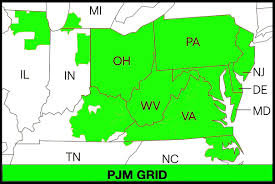
And that bottleneck is now directly tied to reliability for roughly 67 million people across 13 states and the District of Columbia.
The scale of new capacity seeking grid access is not limited to the PJM region, with projects such as the 250 MW Selenite Springs Energy Center in West Texas also moving toward grid connection as part of the broader expansion of U.S. generation capacity.
A changing energy mix inside the queue
The content of the application queue itself reveals another trend, and that is diversification with an underlying conflict.
Storage is ahead of the pack with 349 projects, while natural gas, solar, wind, hybrid, nuclear, and small amounts of hydro and other sources follow behind.
A few trends emerge.
First, there is the fact that storage now accounts for the majority of queue entries as it becomes the dominant entry type for a reason relating more to flexibility than capacity. Meanwhile, the presence of natural gas in the proposal queue highlights the continued influence of reliability issues, as some parts of the system remain anchored to fossil fuel plants.
There is also the growing trend toward nuclear, including small modular reactors, and nascent interest in fusion ideas. Such developments will not matter for quite some time, but they do suggest that certain long-term assumptions about grid planning are being made.
Renewables are still important, but they are no longer the only development story.
AI enters the interconnection process
One of the less visible but increasingly important developments is how PJM is attempting to scale its review process using digital tools.
The operator has begun deploying an AI-enabled system developed through Google’s Tapestry initiative, designed to help analyze large volumes of interconnection application data more efficiently.
The tool, known as HyperQ, assists in identifying and sorting technical documentation for further review. PJM expects it to reduce study times, though its long-term impact on approval speed and project throughput remains uncertain.
This marks a subtle but significant shift: grid management is beginning to incorporate machine-assisted processing not just in operations, but in regulatory workflow itself.
Whether this meaningfully resolves structural delays in interconnection studies is still an open question.
Reform solves one problem—and exposes another
Many in the industry see the reforms that PJM has introduced to its interconnection process as a needed fix for a system overwhelmed with speculative projects and delays within the process.
By mandating the ability to proceed up front, the system should theoretically be able to alleviate congestion and push potential projects further down the path toward development.
The reform does come at a price, though.
Entry restrictions could lead to better processes in the queue, but they will likely also make it tougher for small developers or early-stage projects that need to progress through a series of financing and regulatory steps. It seems, therefore, that the system is becoming more efficient but perhaps less inclusive.
What’s more, demand is rising at a faster pace than new supply is coming online.
The central tension: speed versus certainty
What emerges from PJM’s latest cycle is not just a pipeline of projects, but a structural tension in U.S. energy planning.
On one side is the need for speed—connecting generation quickly enough to keep up with rising demand. On the other is the need for certainty—ensuring that only viable, fully developed projects consume scarce transmission study capacity.
PJM is attempting to solve both problems simultaneously. But in practice, improving one often comes at the expense of the other.
The success of the reform will not be measured by how many projects enter the queue. It will be measured by how many reach operation within a realistic timeframe.
A system under pressure, not equilibrium
The broader takeaway is that the U.S. grid is no longer operating in a stable expansion environment. It is operating under compounding pressure: rising demand, constrained transmission, evolving technology mixes, and increasingly complex interconnection requirements.
The latest PJM cycle does not resolve these tensions. It simply makes them visible at scale.
And in that sense, the 220 GW figure is not a signal of abundance.
It is a signal of strain.


