

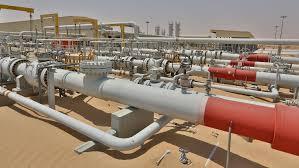
The Kuwait gas project worth $3.3 billion has been put on hold, marking a major setback for a strategic energy construction project in southern Kuwait. However, escalating regional tensions have disrupted timelines, while security concerns continue to undermine progress on this critical gas processing development.
Kuwait Gas Project faces geopolitical disruption
The Kuwait gas project aimed to deliver a major onshore production facility near the Al-Zour refinery. However, authorities have now suspended tendering activities indefinitely. Previously, the project advanced on a fast-track basis, with early contractor engagement launched in 2025. Moreover, bid submissions were expected by early 2026.
However, regional instability has since intensified. Consequently, project stakeholders consider execution impractical under current security conditions. Notably, tensions involving Iran have significantly impacted offshore developments linked to the Dorra gas field. Therefore, risks have extended beyond construction into logistics and supply chains. Additionally, the proximity of the field to disputed waters has increased uncertainty. As a result, project planning has become increasingly complex.
Kuwait Gas Project scope and strategic importance
The Kuwait gas project was designed to process approximately 632 million cubic feet of gas daily. Furthermore, it would handle significant condensate volumes. Importantly, the facility would process gas from the Dorra offshore field in the Partitioned Neutral Zone. This area is jointly managed by Kuwait and Saudi Arabia. However, Iran continues to dispute the field, referring to it as Arash. Consequently, geopolitical tensions have complicated development plans.
Despite these challenges, the project remains central to Kuwait’s long-term energy strategy. Specifically, it aims to reduce reliance on imported LNG. Moreover, Kuwait continues to face domestic gas shortages, particularly for power generation and industrial use. Therefore, the project holds strong economic importance.
Technically, the project completed its front-end engineering design phase under Technip Energies. Subsequently, authorities planned a single EPC contract tender. Additionally, several international contractors expressed interest during pre-tender discussions. These included major firms from Asia and beyond.
Delays reshape Kuwait Gas Project timeline
Initially, authorities expected to issue the invitation to bid by late 2025. However, the timeline shifted several times into early 2026. Then, escalating conflict in the Gulf region forced further delays. Consequently, authorities postponed the tender again in March 2026.Now, the Kuwait gas project remains officially on hold as of April 2026. Furthermore, no revised timeline has been announced.
Importantly, the Strait of Hormuz disruptions have compounded challenges. As a result, Kuwait has faced export constraints and operational setbacks. Additionally, infrastructure risks and supply chain disruptions have increased project uncertainty. Therefore, stakeholders have adopted a cautious approach.
Even if tensions ease, recovery may take several months. Meanwhile, construction schedules will likely require significant adjustments. Nevertheless, the project retains long-term strategic value. Therefore, industry observers expect it to resume once conditions stabilize.
However, the suspension of the Kuwait gas project also reflects broader uncertainty across Gulf gas developments. For instance, the $7.7 billion Fadhili gas plant expansion project in Saudi Arabia continues to advance despite market volatility, highlighting how strategic gas infrastructure projects are progressing unevenly across the region.
Project Fact Sheet
Project Name: Kuwait Gas Project (Onshore Production Facility)
Location: Southern Kuwait, near Al-Zour refinery
Estimated Cost: $3.3 billion (potentially up to $3.9 billion)
Client: Kuwait Gulf Oil Company (KGOC)
Project Type: Gas processing plant (onshore production facility)
Capacity:
Gas: 632 million cubic feet per day
Condensates: Large-scale processing capacity (reported figures under review)
Feed Source: Dorra (Durra/Arash) offshore gas field
Development Zone: Saudi-Kuwait Partitioned Neutral Zone
Contract Strategy: Single EPC contract
FEED Completion: By Technip Energies
Status (2026): On hold
Original Timeline:
- Early contractor engagement: 2025
- ITB expected: Late 2025–March 2026
Key Challenges:
- Regional geopolitical tensions
- Security risks near Iranian waters
- Strait of Hormuz disruptions
- Supply chain constraints
Strategic Objective:
- Boost domestic gas production
- Reduce LNG imports
- Support power and industrial demand
Project Team
Client / Operator: Kuwait Gulf Oil Company (KGOC)
FEED Contractor: Technip Energies
Interested EPC Contractors (Pre-Tender Stage):
Stakeholders:
- Kuwait government energy authorities
- Saudi Arabian partners (Partitioned Neutral Zone collaboration)


